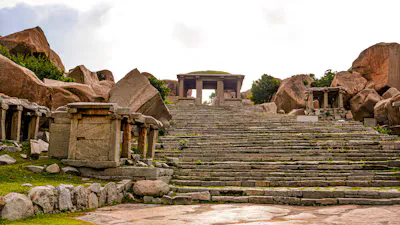
Stepping into Hampi is akin to stepping through a portal into another epoch. Set against an extraordinary, surreal landscape of giant granite boulder hills, banana plantations, and the winding streams of the Tungabhadra River, Hampi stands as one of the world’s most magnificent archaeological wonders. Located in the northern part of Karnataka, this UNESCO World Heritage site was once the glorious, opulent capital of the medieval Vijayanagara Empire—a metropolis that rivaled Rome in its wealth and architectural grandeur. Today, its sprawling ruins, sacred temples, and royal enclosures offer an unforgettable journey into India's imperial history.
The Rise and Fall of the Vijayanagara Empire
Founded in the 14th century by the brothers Harihara and Bukka, the Vijayanagara Empire grew to become a superpower that dominated South India for over two centuries. At its zenith, Hampi was a bustling hub of international trade, art, architecture, and military might, where merchants traded diamonds, horses, and silk along vibrant open-air bazaars. However, following a devastating defeat in the Battle of Talikota in 1565 by a coalition of Deccan sultanates, the city was plundered, abandoned, and left to the elements. Over the centuries, nature reclaimed parts of the valley, wrapping ancient stone monuments in giant boulder hills and transforming a once-thriving metropolis into a breathtaking landscape of silent, sun-baked ruins.
Architectural Marvels and Sacred Complexes
Hampi’s vast expanse is divided into distinct zones, primarily grouped around the Sacred Centre and the Royal Enclosure. Exploring these monumental structures reveals the staggering ingenuity of ancient Indian craftsmen:
Virupaksha Temple: Situated on the banks of the Tungabhadra River in the Hampi Bazaar area, this is the oldest and only functioning temple in the ruins, dedicated to Lord Shiva. Its towering gopuram (gateway tower) dominates the skyline, and daily rituals continue to draw pilgrims much as they did centuries ago.
Vittala Temple Complex: Hampi's crowning architectural masterpiece, the Vittala Temple is famous for its iconic Stone Chariot—an intricately carved monolithic shrine dedicated to Garuda—and its legendary musical pillars, which produce resonant musical notes when gently tapped.
Lotus Mahal and Elephant Stables: Located within the Royal Enclosure, these structures reflect a unique synthesis of Hindu and Indo-Islamic architectural styles. The two-story Lotus Mahal served as a cooling pavilion for the royal women, while the adjacent domed elephant stables highlight the scale of the royal cavalry.
Exploring the Landscape: Boulders, Coracles, and Sunsets
Beyond its historical monuments, Hampi offers a uniquely laid-back, adventurous outdoor experience defined by its topography.
Coracle Rides on the Tungabhadra: A traditional ride across the Tungabhadra River in a circular wicker coracle boat provides a fun, scenic way to cross between Hampi Bazaar and the northern side of the river (often called the hippie island side), surrounded by dramatic granite cliffs.
Sunset Viewpoints: Climbing up to Matanga Hill or Anjanadri Hill (believed to be the birthplace of Lord Hanuman) offers the ultimate Hampi experience. Watching the sunset cast a golden, fiery glow over the endless expanse of boulder-strewn hills and temple ruins is nothing short of magical.
Practical Tips for Visitors
Best Time to Visit: The cooler winter months between October and March provide the ideal climate for walking through the sprawling ruins without oppressive midday heat.
Getting Around: Hampi is best explored on foot, by bicycle, or by renting a moped. Hiring a local guide at major temple complexes like Vittala or Virupaksha is highly recommended to fully appreciate the deep historical context behind the stones.
Ultimately, a journey through Hampi is a mesmerizing collision of mythology, empire, and geology—where every boulder, pillar, and broken archway tells the story of a golden age that refuses to be forgotten.
Written by
Funtoor Travel Team
Travel planners based in Chail, Himachal Pradesh. We plan and arrange trips — stays, transport and experiences — across the Himalayas.