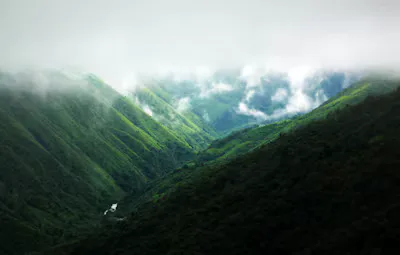
Meghalaya, aptly translating to the "Abode of Clouds," is one of India's most ecologically diverse and visually stunning northeastern states. Renowned for receiving some of the highest rainfall on Earth, this mountainous state transforms into a lush, misty paradise featuring roaring waterfalls, intricate subterranean cave networks, and botanical wonders shaped by generations of indigenous ingenuity. A journey through Meghalaya offers travelers an unforgettable immersion into a vibrant tribal culture and an untamed landscape carved by water and time.
The Land of Roaring Waterfalls
Because of its immense monsoon rainfall, Meghalaya is home to countless cascading waterfalls that plunge dramatically down verdant gorges and limestone cliffs.
Nohkalikai Falls: Standing as the tallest plunge waterfall in India at an awe-inspiring height of 1,115 feet, Nohkalikai is a must-visit spectacle near Cherrapunji (Sohra). The sight of pristine white water crashing down a sheer green cliff into a vibrant turquoise pool below is unforgettable, carrying with it a poignant local legend of grief and resilience.
Seven Sisters Falls (Nohsngithiang Falls): Known for its unique segmented appearance, this waterfall splits into seven distinct streams cascading side-by-side down limestone escarpments. During the monsoon, they swell into a massive, roaring torrent that dominates the valley wall.
Elephant Falls: Located near Shillong, this three-tiered waterfall offers easy accessibility and beautiful vantage points framed by dense forests and moss-covered rocks.
Architectural Wonders: Living Root Bridges
Perhaps Meghalaya's most iconic and fascinating cultural-ecological marvels are its living root bridges, primarily found in the East Khasi Hills and Jaintia Hills.
The Engineering Feat: Created by the Khasi and Jaintia indigenous communities, these bridges are not built; they are grown over decades and centuries. Using the pliable aerial roots of the Ficus elastica (rubber tree), local villagers guide the roots across rushing rivers using hollowed-out betel nut trunks as scaffolding. Over time, the roots intertwine, strengthen, and fuse together, creating living structures capable of supporting the weight of dozens of people simultaneously.
The Famous Double Decker Bridge: Located in the remote village of Nongriat, the Umshiang Double Decker Living Root Bridge is an extraordinary two-tiered marvel that requires a strenuous trek down thousands of stone steps through deep jungle valleys, rewarding hikers with crystal-clear natural swimming pools and pristine wilderness.
Subterranean Exploration: Mystical Caves
Beneath Meghalaya’s lush green surface lies one of the most complex and extensive limestone cave systems in the world. The state features hundreds of charted caves, many of which rank among the longest and deepest in the Indian subcontinent.
Mawsmai Cave: Located near Cherrapunji, Mawsmai is easily accessible and illuminated just enough for visitors to walk through and marvel at magnificent stalactite and stalagmite formations sculpted over millennia.
Krem Mawmluh and Arwah Cave: For more adventurous travelers, caves like Krem Mawmluh offer thrilling spelunking experiences. Navigating these subterranean chambers reveals underground streams, narrow passageways, and fossilized rock layers that tell the geological history of the region.
Culture, Climate, and Responsible Tourism
Meghalaya is predominantly inhabited by three major indigenous tribes—the Khasi, Jaintia, and Garo peoples. The region follows a matrilineal system, where lineage and family property are passed down through the youngest daughter. Visitors are greeted by warm hospitality, vibrant local markets, and a deeply rooted respect for nature, where many forests are protected as "sacred groves" where logging and hunting are strictly forbidden.
Best Time to Visit: While the monsoon season (June to October) showcases the waterfalls at their most thunderous and dramatic peak, the post-monsoon and winter months (October to April) offer clear blue skies, pleasant daytime weather, and ideal conditions for trekking to living root bridges and exploring caves.
Ultimately, Meghalaya is a testament to the harmonious coexistence between humanity and nature, offering a landscape where clouds touch the forests, rivers carve through stone, and living bridges connect the past with the future.
Written by
Funtoor Travel Team
Travel planners based in Chail, Himachal Pradesh. We plan and arrange trips — stays, transport and experiences — across the Himalayas.