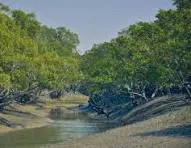
The Sundarbans, spanning across India and Bangladesh, represents the largest uninterrupted mangrove delta in the world and a UNESCO World Heritage site of extraordinary ecological significance. A journey into this wild, amphibious frontier offers an escape from urban landscapes into a labyrinth of tidal rivers, narrow creeks (jhors), and dense halophytic forests. Because the region features no traditional roads or jeep tracks, travel here is entirely water-borne, requiring visitors to experience the ecosystem from the intimate perspective of a river boat or launch.
Wildlife and Natural Wonders
The biosphere reserve is famously home to the Royal Bengal Tiger. Unlike their counterparts in drier, deciduous forests, Sundarbans tigers have evolved unique behavioral traits: they swim effortlessly across wide channels, hunt aquatic prey, and navigate a challenging saline environment. While tiger sightings require patience and a measure of good fortune due to the dense cover, tracking their fresh pugmarks along muddy embankments adds an electric sense of anticipation to any safari.
Beyond the apex predators, the delta teems with diverse wildlife. Saltwater crocodiles frequently bask on exposed grey mudbanks during low tides, while spotted deer (chital) and wild boars graze along the forest edges. Lucky travelers may also spot Irrawaddy dolphins or Gangetic river dolphins gliding through wider tidal channels. For ornithologists, the region acts as a paradise housing over 300 bird species, including the iconic brown-winged kingfisher, mangrove pitta, lesser adjutant stork, and numerous migratory waterbirds that arrive during the cooler winter months.
Navigating via Boat Safaris
Exploring the Sundarbans revolves entirely around the rhythm of the tides, which twice daily reshape the landscape by submerging mudbanks and altering currents. Journeys typically begin with a road transfer from Kolkata to gateway points like Godkhali, followed by a transition to motorized boats or traditional wooden launches.
Safari Formats: Travelers short on time can opt for a single-day tour covering major watchtowers like Sudhanyakhali, Sajnekhali, and Dobanki. However, a multi-day immersion—such as a 2-night, 3-day package or a live-aboard boat experience—provides a much deeper connection to the environment. These extended trips allow visitors to witness mist-laden sunrises over the water, navigate narrow interior creeks where wildlife viewing peaks, and experience local cultural highlights like traditional Baul music or Bonbibi folklore performances.
Best Time to Visit: While open across different seasons, the optimal window runs from September to March. Winter months (November to February) deliver pleasant weather, minimal humidity, clear water channels, and peak birdwatching conditions.
The Imperative of Responsible Tourism
Because the Sundarbans ecosystem is extraordinarily fragile and vulnerable to climate change, rising sea levels, and human-wildlife conflict, practicing responsible tourism is paramount. Sustainable exploration safeguards both the environment and the local communities who call the delta home:
Strict Waste Management: Visitors must avoid single-use plastics and ensure that zero garbage enters the riverways or forest grounds.
Noise Control: Sound travels efficiently across open water. Maintaining strict silence and keeping voices low prevents wildlife from fleeing and preserves the natural tranquility of the sanctuary.
Community Engagement: Supporting eco-friendly local tour operators ensures that tourism revenue directly benefits indigenous communities, encouraging them to act as stewards of the forest rather than pressures on its resources.
Adhering to Guidelines: Respecting forest department regulations, wearing mandated safety gear like life jackets, and keeping a respectful distance from wild animals guarantee that human presence leaves a minimal footprint.
Ultimately, a trip to the Sundarbans transcends standard wildlife tourism; it is an immersive education in resilience, conservation, and the raw, untamed power of nature's largest mangrove frontier.
Written by
Funtoor Travel Team
Travel planners based in Chail, Himachal Pradesh. We plan and arrange trips — stays, transport and experiences — across the Himalayas.